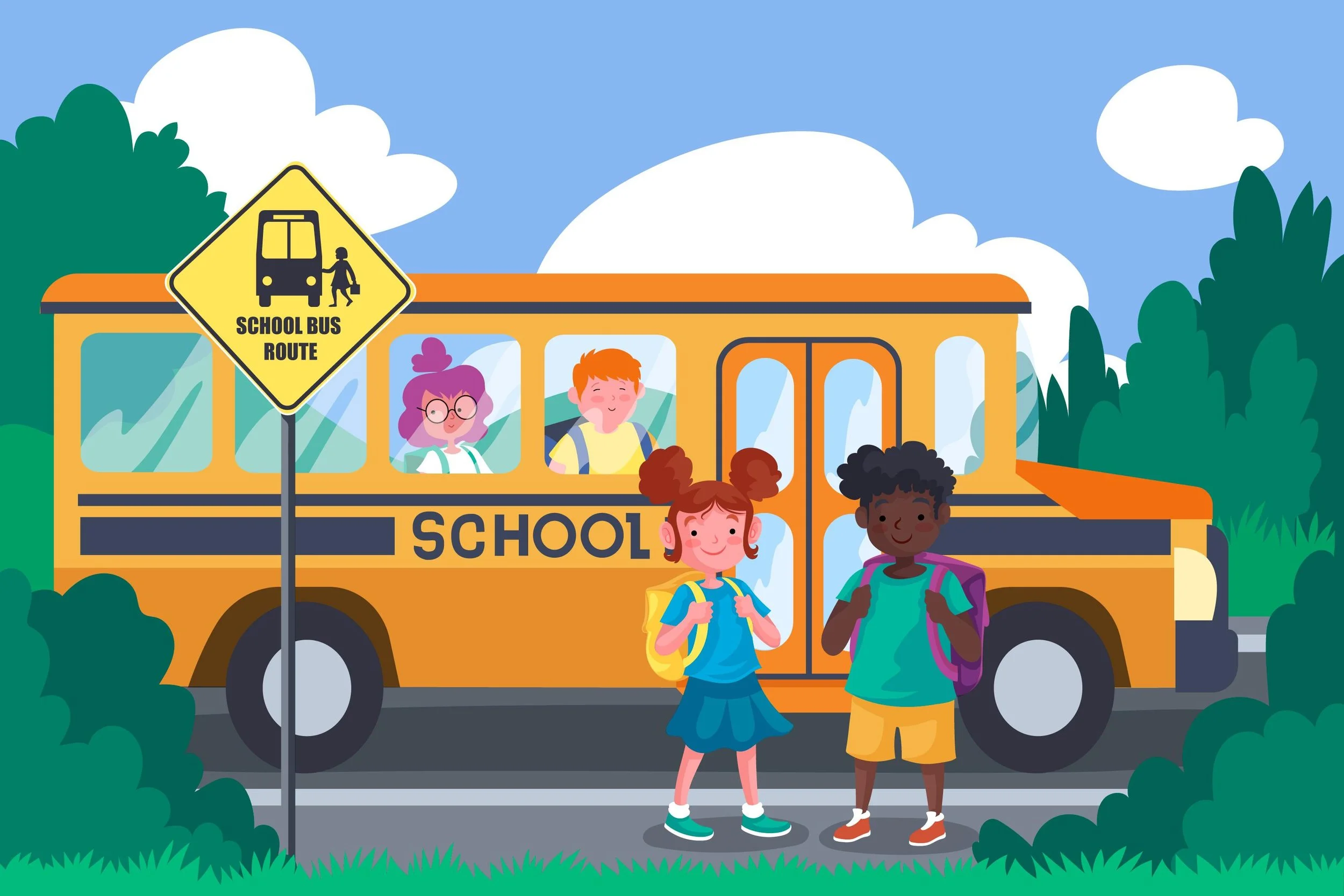
Every morning, when we come outside to catch the bus, there's a child who makes a point to greet Miko.
“Hi, Miko!” And then, a moment later: “Okay, bye, Miko!”
They ride different buses, so their paths don't exactly overlap beyond those few moments in the morning. But somehow, this little greeting has become part of our routine.
And every time it happens, Miko responds with the happiest little bounces.
Miko is functionally nonverbal and communicates using an AAC device. He doesn't always respond to greetings in ways people might expect, and he may not say hello back with spoken words. But he recognizes this familiar interaction, and his excitement is hard to miss.
I love watching it happen.
There's something about seeing another child make space for Miko in such an uncomplicated way that is so special to me. They don't need him to respond a certain way. They don't seem to need anything from him in return. They simply see him, say hello, and move along with their morning.
And I think about how much that matters.
Inclusion doesn't always announce itself
When we talk about inclusion in schools, we often think about the bigger things. Classroom placement, individualized education programs, accommodations, paraprofessional support, accessible activities, and policies that help ensure children with disabilities can participate in school life.
All of those things matter. They are necessary, and families shouldn't have to fight so hard to access them. But inclusion also happens in the moments that don't make it into an IEP meeting.
It's a classmate saving someone a seat. It's a child remembering another child's name. It's being invited to play, being greeted in the hallway, or having someone make room for you in a conversation.
It's the everyday experience of being recognized as part of the group.
That morning greeting is a reminder that belonging isn't only shaped by the accommodations adults put in place. It's also shaped by how children learn to interact with, understand, and make room for one another. And those lessons start early.
Communication looks different for different people
One thing I wish more people understood is that communication doesn't begin and end with spoken language.
Miko uses an AAC device, and his communication may look different from what people are accustomed to. He may respond with his device, through movement, facial expressions, gestures, or other forms of communication.
His happy bounces are one way I recognize his excitement.
But children who communicate differently still want connection. They still have preferences, personalities, relationships, and ways of participating in the world around them.
Sometimes, people become so focused on whether a child can speak that they overlook all the ways that child is already communicating. And sometimes, they miss opportunities to connect because they're waiting for a response that looks familiar.
We can do better.
We can teach children that they don't have to understand every form of communication to be kind. They can learn to wait, pay attention, give someone time, and recognize that a response doesn't always have to sound like their own.
We can also remind them that a person using an AAC device has something to say. Speak directly to them. Include them in the conversation. Give them time to respond. And don't make assumptions about what they understand based on whether they use spoken language.
These are small lessons, but they help create communities where more people can participate without having to change how they communicate.
We have a role in creating inclusive communities
Schools are an important part of this conversation, but inclusion shouldn't stop at the classroom door. Our children interact with one another on school buses, at bus stops, in parks, at birthday parties, in libraries, at community events, and in all the other places where childhood happens.
Those spaces should make room for children with different communication styles, sensory needs, mobility needs, and ways of engaging with the world.
And there are practical ways we can help make that happen.
Teach children to acknowledge one another. Encourage them to say hello, introduce themselves, invite others to participate, and recognize their classmates as people they can build relationships with. A greeting doesn't have to turn into a conversation to be meaningful.
Create opportunities for connection. Make sure children with disabilities have opportunities to participate in group activities, clubs, field trips, playdates, and community events. Being physically present is one thing. Having opportunities to build relationships is another.
Make communication accessible. Help children understand that some people use AAC devices, sign language, gestures, or other communication methods. Encourage them to be patient and give others time to respond.
Make accommodations part of the environment. Sensory tools, accessible spaces, flexible activities, and different ways to participate shouldn't be treated as unusual additions. They help make shared experiences possible for more children.
Let children learn from one another. We don't need to turn every interaction into a formal lesson about disability. Sometimes children simply need opportunities to spend time together, get to know one another, and discover that they can enjoy each other's company.
And adults have to model this, too. Children pay attention to how we speak about people with disabilities, how we respond when someone communicates differently, and whether we make room for people who don't fit our expectations.
The culture of inclusion we're hoping to build has to be reflected in our everyday behavior.
A little hello can mean a lot
I don't know what this child thinks about their morning greetings with Miko. Maybe it's simply something they've gotten used to doing. Maybe they've noticed how happy he gets when they say hello. Maybe their parents told them to. Either way, they've made a little space for him in their morning, and I appreciate that more than they will ever realize.
I also think about Miko's experience.
He gets to start his morning being recognized by another child. Someone knows his name. Someone looks forward enough to seeing him to make a point of saying hello. And he gets to respond in his own way, with those happy bounces that I know so well.
I want more of that for him.
I want him to have classmates who know him, friends who include him, and opportunities to build relationships that aren't dependent on him communicating or participating in ways that make other people comfortable.
I want him to experience community beyond the support he receives from the adults around him.
And I want that for other children, too.
Because inclusion isn't just about making sure children with disabilities have access to the same buildings, classrooms, and activities. It's also about whether they get to experience the relationships, friendships, and everyday connections that make those places feel like community.
Some mornings, inclusion looks like a carefully designed accommodation or a school that has made the effort to understand a child's needs.
And some mornings, it looks like a child calling out:
“Hi, Miko!”
Followed by:
“Okay, bye, Miko!”
And a little boy bouncing with excitement.
I'll take more mornings like that.
