
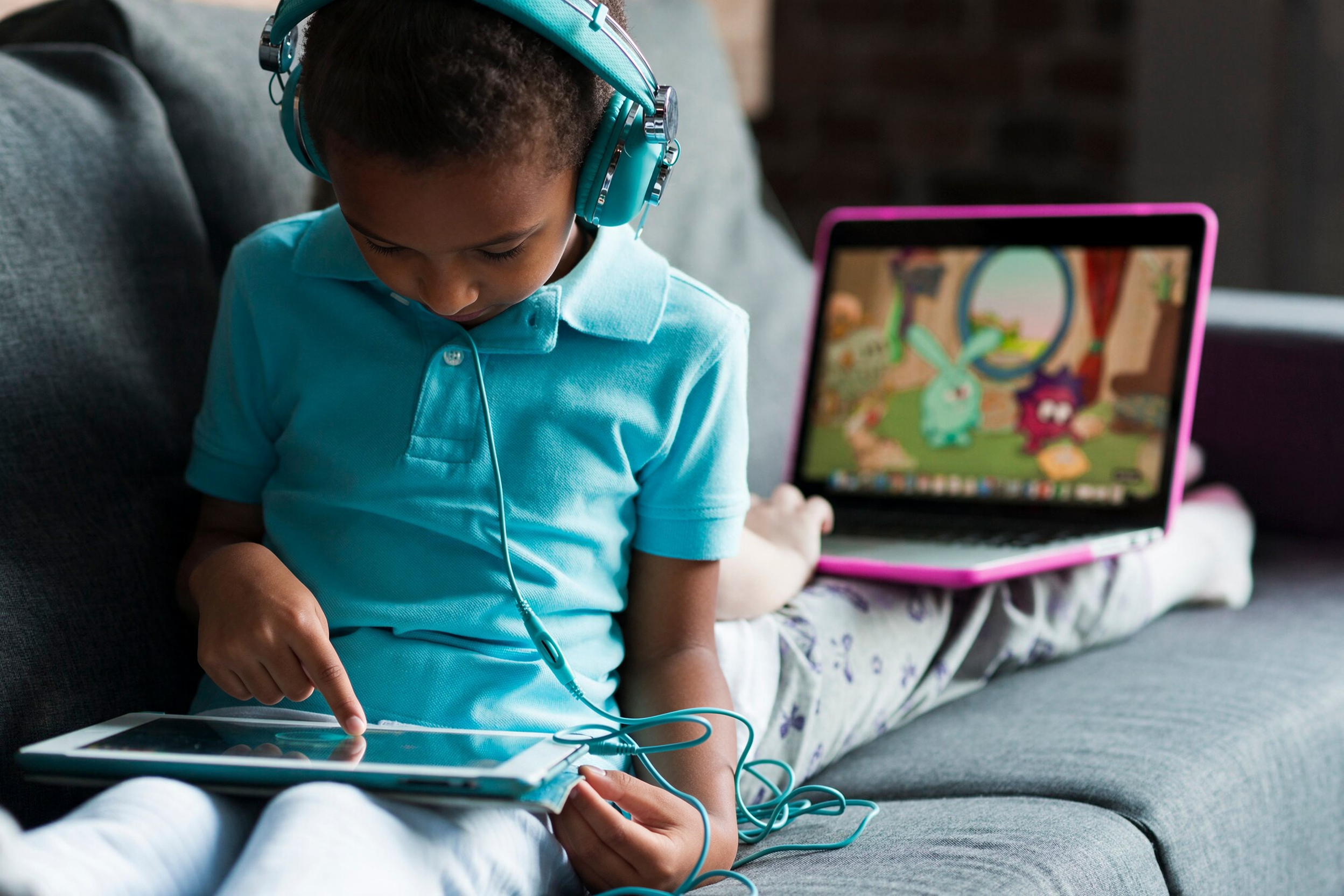
“I’ve never seen so many kids with devices at school before.”
I overheard a parent say this as the support classrooms came down the hall for Thanksgiving lunch with their families.
I was there to visit Miko. He was in one of those classrooms, and like many of his classmates, he was carrying an AAC device to communicate. As the children made their way toward the cafeteria, some had fidgets and others had headphones. They were walking toward us, ready to have lunch with their families.
And I remember thinking: What a world this could be.
A world where seeing children with accommodations isn't a rare sight. Where communication devices, sensory tools, and other forms of support are simply part of the environment. Where children are supported, valued, and cared for with patience and respect, as whole human beings.
Not as a special occasion. Not as an exception. Just as a normal part of being in community.
I don't know what the parent intended by the comment. Maybe it was simple surprise. Maybe they hadn't encountered that many children using accommodations in one place before. But it stayed with me because it made me think about how often inclusion is discussed as an idea, while the everyday experience of it can still feel unfamiliar to people.
And it made me think about what it takes to create more inclusive spaces.
Inclusion is built in the everyday moments
We often talk about inclusion in terms of policies, programs, and awareness campaigns. Those things matter, but children experience inclusion in much smaller moments, too.
It's whether they can communicate in the way that works for them. Whether they can take a break when the environment becomes overwhelming. Whether adults understand that a child using headphones isn't being rude or disengaged. Whether a child who needs more time to respond is given that time.
It's whether the people around them are willing to make room for different ways of moving through the world.
There are practical ways we can make that happen:
Make communication accessible. Recognize that communication doesn't always happen through speech. Learn to respect AAC devices, gestures, signs, communication boards, and other ways people express themselves. Don't take someone's device away, speak over them, or assume they have nothing to say because they aren't speaking.
Make room for sensory needs. Headphones, fidgets, movement breaks, quiet spaces, and changes to the environment can make participation possible. These aren't distractions from the experience. For many people, they're what make the experience accessible in the first place.
Give people time and autonomy. Allow extra time to process questions, respond, transition, or participate. Ask before helping. Respect a person's answer, including when that answer is no. Support should never require someone to surrender their autonomy.
Look beyond what you can see. Not every disability or support need is visible. Someone may need an accommodation that isn't obvious to the people around them. Avoid making assumptions about what a person can do, understand, or manage based on appearance.
Include people in the experience, not just the invitation. It's one thing to say everyone is welcome. It's another to consider whether the space, schedule, activities, communication, and expectations actually allow people to participate. Inclusion takes planning, flexibility, and a willingness to adjust.
And perhaps most importantly, teach children that differences aren't something to stare at, laugh about, or treat as unusual. They're part of being human. Children learn how to treat one another by watching the adults around them.
As much as I appreciated what I saw that day, I also felt a little sadness.
Because I couldn't help thinking about all the children who spend their school days masking discomfort, suppressing movement, struggling to communicate, or trying to meet expectations that don't account for how they experience the world.
And it's not just children. There are adults doing the same thing at work, in public spaces, in relationships, and in everyday interactions. People who have learned to hide their needs because asking for support feels uncomfortable, inconvenient, or unsafe. People who go without accommodations because they don't know what's available, can't access what they need, or have spent years believing they should be able to manage without help.
Sometimes, the absence of visible support is mistaken for the absence of need.
That's the part I want us to think about.
A person shouldn't have to reach a breaking point before someone considers making an adjustment. A child shouldn't have to struggle visibly before their needs are taken seriously. And someone shouldn't have to explain, justify, or prove their disability to deserve a little patience.
I want more children to grow up in spaces where using an AAC device, wearing headphones, taking a sensory break, or needing additional support doesn't draw a second glance. I want adults to experience that same freedom. I want accommodations to be understood as a normal part of making shared spaces work for more people.
That Thanksgiving lunch is just a glimpse of what that can look like. I was there to spend time with my child, and I got to see a community of children showing up with the tools and support they needed to participate.
I don't take that for granted.
And it reminded me that inclusion isn't something we accomplish simply by opening the door. It's what happens when people can walk through it, show up as themselves, access what they need, and know they belong there.
I hope we keep working toward a world where seeing people supported is no longer surprising. Where the question isn't why someone needs an accommodation, but how we can make sure they have it.
