
Every Saturday, we visit the farmer's market. And every Saturday, Miko makes a beeline for the bread stand.
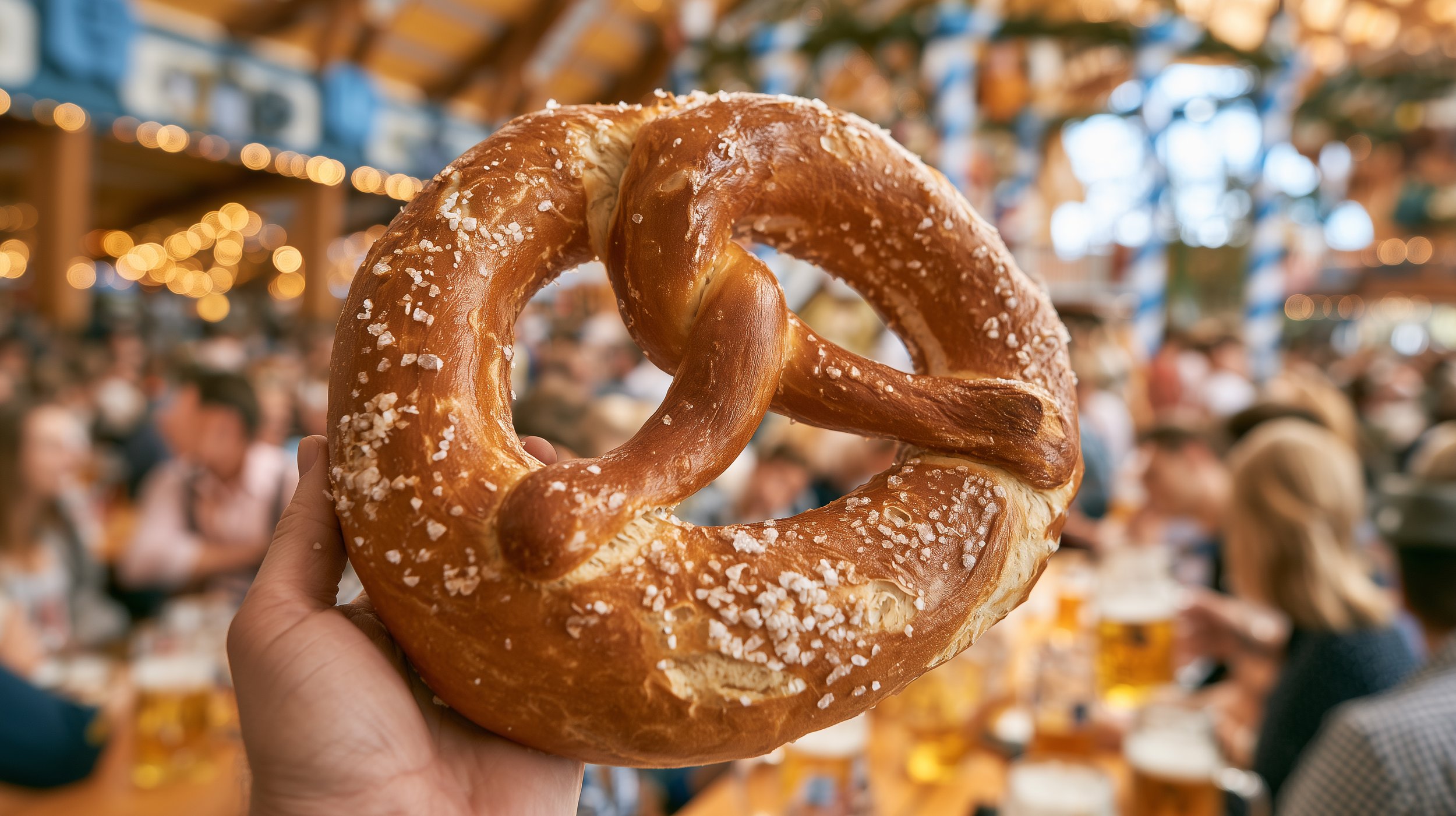
There is a particular pretzel he has decided belongs to him. At this point, I'm not sure he understands that there's a purchasing process involved. He sees the pretzel, makes his way to the table, grabs it before I can pay, and starts eating.
Just like that. Transaction pending. Pretzel secured.
It's become part of our Saturday routine, and honestly, I don't think the people at the bread stand are surprised to see us anymore.
There is something really special about that.
For Miko, familiar places and predictable routines can make a big difference in how he experiences the world. Knowing where we're going, recognizing the people we'll see, and understanding what comes next can make an outing feel more comfortable. And the more we visit, the more familiar the environment becomes.
But I've also started to appreciate what that familiarity means beyond the routine itself.
It's the people who recognize him. The vendors who know which table he's heading toward. The faces that have become part of our Saturday mornings. It's being able to show up somewhere without feeling like we have to introduce ourselves all over again or explain every little thing about how Miko moves through the world.
He's not just a child visiting the farmer's market. He's becoming part of the community.
And I think that's something we sometimes overlook when we talk about inclusion.
Familiarity makes room for belonging
For many neurodivergent children, unfamiliar environments can come with a lot to process. New sounds, new people, unexpected changes, different expectations, and not knowing what comes next can make an otherwise simple outing feel like a much bigger undertaking.
Routine and familiarity can help reduce some of that uncertainty. Repeated experiences give children opportunities to recognize their surroundings, become comfortable with the people in them, and participate in ways that feel manageable.
But the community plays a role, too.
When people see a child regularly, they begin to recognize them as more than a passing face. They learn their preferences, their personality, and the little things that make them who they are. They become familiar with their communication, their movements, and the ways they engage with the world.
And that familiarity can change the experience for the entire family.
You don't feel like every outing is a first introduction. You don't have to wonder whether someone will misunderstand your child's behavior or make assumptions about what they need. There's a little more room to simply exist, enjoy the morning, and buy a pretzel. Or, in Miko's case, eat one before the purchase is finalized.
Community is built through ordinary interactions
I want Miko to experience the world beyond the places that are already familiar to him. I want him to try new things, visit new places, and have opportunities to explore.
But I also want him to have places where people know him.
Places where his presence is expected. Where he can walk in and be greeted. Where his communication is respected, even if someone doesn't immediately understand it. Where people are patient when he needs more time or approaches an experience differently.
And we don't have to wait for a formal inclusion initiative to start creating those spaces.
We can start with ordinary interactions:
Become a familiar face. Visit local businesses, parks, libraries, and community spaces. Repeated, low-pressure experiences can help children become more comfortable in their surroundings.
Get to know people in your community. A familiar greeting, a remembered preference, or someone who recognizes your child can make an outing feel more welcoming.
Give children room to participate differently. Not every child will greet someone, answer a question, wait in line, or interact in the expected way. Participation can look different, and that's okay.
Practice patience instead of making assumptions. A child who is moving around, using an AAC device, wearing headphones, or taking time to respond is still participating in the community.
Let children be known beyond their diagnosis. Learn what they enjoy, what makes them laugh, what they're curious about, and what they look forward to. Their support needs are part of their experience, but they are never the entirety of who they are.
Inclusion isn't always a big gesture. Sometimes it's a vendor remembering your child's favorite pretzel. It's a neighbor who waves every morning. It's a librarian who recognizes your child when they walk through the door.
Those moments might seem small, but they help create something bigger: a sense of belonging.
A little more than a Saturday morning pretzel
I know we'll keep visiting new places and trying new things. There will be outings that go smoothly and others where we decide we've had enough and head home early. That's part of it.
But I hope we continue finding communities where Miko is recognized, welcomed, and expected to show up exactly as he is.
Because families like ours don't just need accessible programs and supportive services. We need everyday spaces where our children can become familiar faces. Where people get to know them. Where they are included in the ordinary rhythm of community life.
And sometimes, that starts with something as simple as showing up every Saturday.
For now, Miko knows where the bread stand is. The pretzel knows where it's going. And I suspect the people behind that table know to expect us.
I'll keep working on the payment-before-eating part.
One Saturday at a time.
